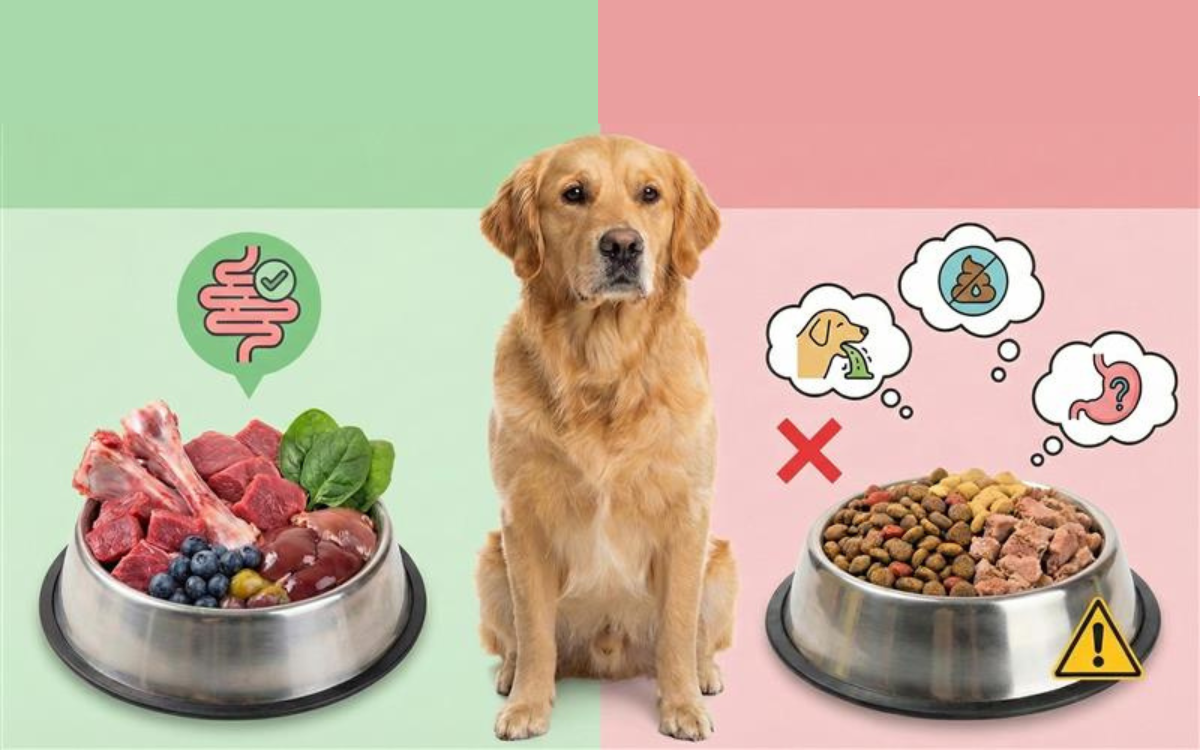
The gastrointestinal health of our pets is one of the main concerns for owners today. Recurrent vomiting, chronic diarrhoea or intolerances are common symptoms of digestive diseases in dogs that often lead us to rethink what is in their food.
In the search for a more natural and less processed diet, many owners have turned their sights towards raw feeding. But does it really help to combat digestive system diseases in dogs or is it a passing fad?
What is the BARF diet for dogs?
The acronym stands for Biologically Appropriate Raw Food. The premise is simple: to mimic the diet that your dog’s wild ancestors (the wolf) would have in nature.
Understanding what the BARF diet for dogs is involves understanding that it is not just about giving “raw meat”, but offering a precise nutritional balance based on fresh products, without cooking and without industrial processing.
Ingredients and composition: What’s in the dish?
To know what the BARF diet is like, we must look at its composition. It is not enough to give them leftovers. A balanced diet must follow specific percentages. The main ingredients of the BARF diet for dogs are:
- Meaty bones (50-60%): They provide calcium and clean teeth.
- Lean meat (20-30%): The main source of protein.
- Offal and organs (10%): Liver, kidney, heart… are vitamin bombs.
- Fruit and vegetables (10%): They provide fibre and antioxidants.
If you look for BARF diet recipes for dogs, you will see that the combinations are endless (chicken, beef, turkey, fish…), but always respecting these proportions to avoid nutritional imbalances.
Pros and cons: The scale of health
Before changing your furry friend’s diet, it is vital to analyse the pros and cons of the BARF diet.
Benefits of the BARF diet in dogs
Defenders of this model report visible improvements quickly:
- Lighter digestion: By not containing cereals or additives, the incidence of gas and gastric torsion is reduced.
- Smaller and less smelly stools: A sign that the body absorbs nutrients better.
- Shinier coat and healthy skin: Thanks to natural fatty acids.
- Dental health: Chewing meaty bones helps to remove tartar mechanically.
The risks to consider
Not everything is positive if not done well. To do the BARF diet requires knowledge and caution:
- Bacterial risk: Raw meat can contain salmonella or E. coli, which, although the dog’s acidic pH usually neutralises, can be a risk for humans handling the food.
- Obstructions: Unsuitable bones can cause serious problems.
- Nutritional imbalances: If not supplemented well, key vitamins may be missing.
How to start and what role does genetics play?
If you decide to try, the transition must be gradual. However, at Koko Genetics we always remember that not all dogs are the same. Before filling the bowl with new ingredients, it is crucial to know if your dog is genetically prepared to process them or if they have hidden sensitivities.
Digestive diseases in dogs and metabolic disorders can have a strong hereditary component. Our DNA test analyses more than 100 diseases, including some directly related to nutrition and the digestive system:
- Cobalamin malabsorption (IGS): Some dogs have a genetic mutation that prevents them from correctly absorbing vitamin B12 in the intestine. If your dog has this condition, no matter how good the BARF diet is, they will need specific supplementation to avoid anaemia and serious problems.
- Hyperuricosuria (HUU): This condition predisposes to forming urinary stones. Why is it key here? Because the BARF diet is usually rich in offal and red meats (high in purines). A dog with HUU would need a modified, low-purine BARF diet to avoid getting sick.
- MDR1 Gene (Drug sensitivity): Although it is not a digestive disease per se, it is vital. Many dogs with a mutation in the MDR1 gene are allergic to common medicines for diarrhoea (such as loperamide). If your dog gets a stomach bug when changing diet and you give them something to “stop the diarrhoea” without knowing they are MDR1 positive, you could cause severe poisoning.